Heel Pain
Overview
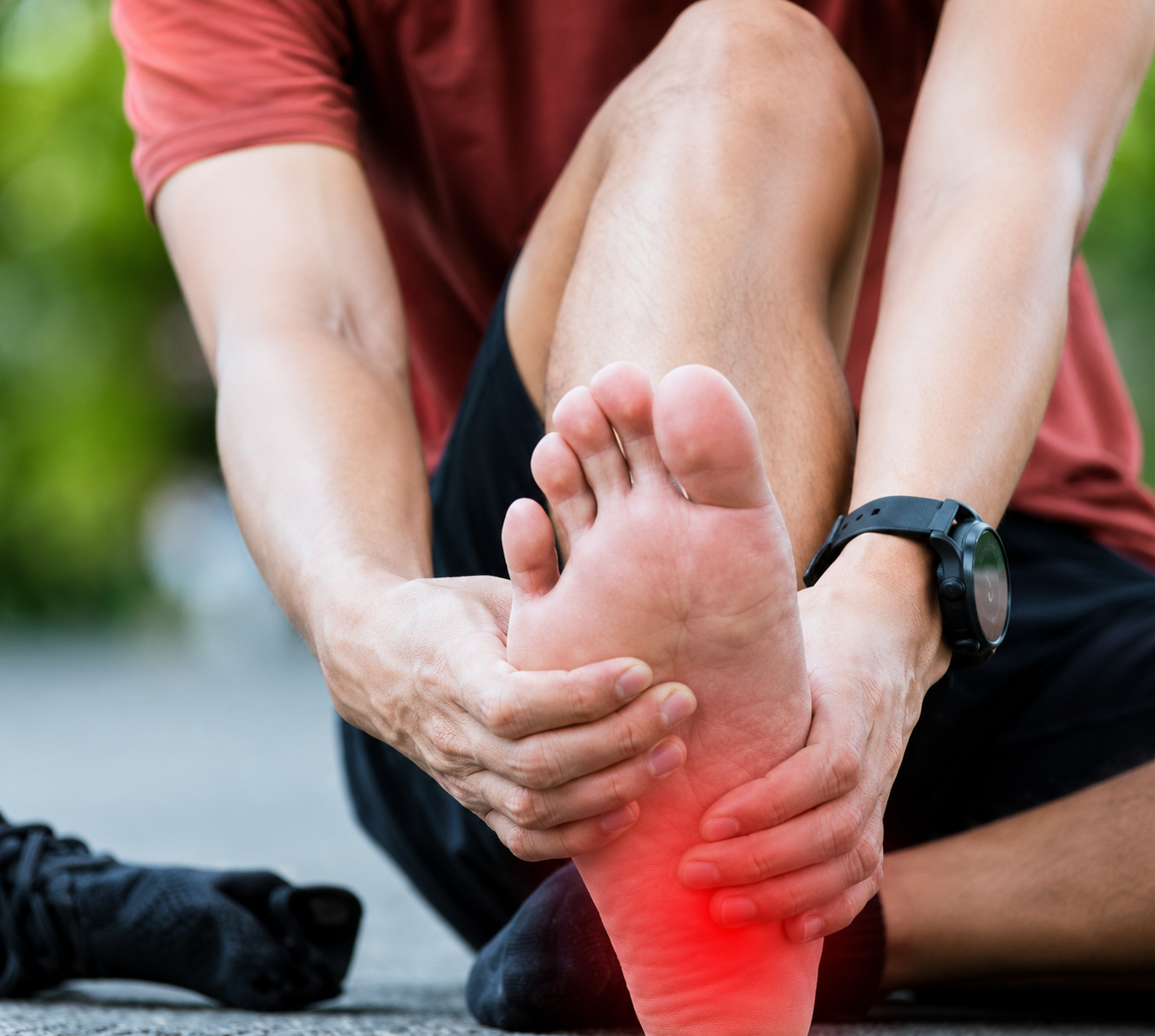
Heel pain is a common foot condition that typically affects below or back of the heel.
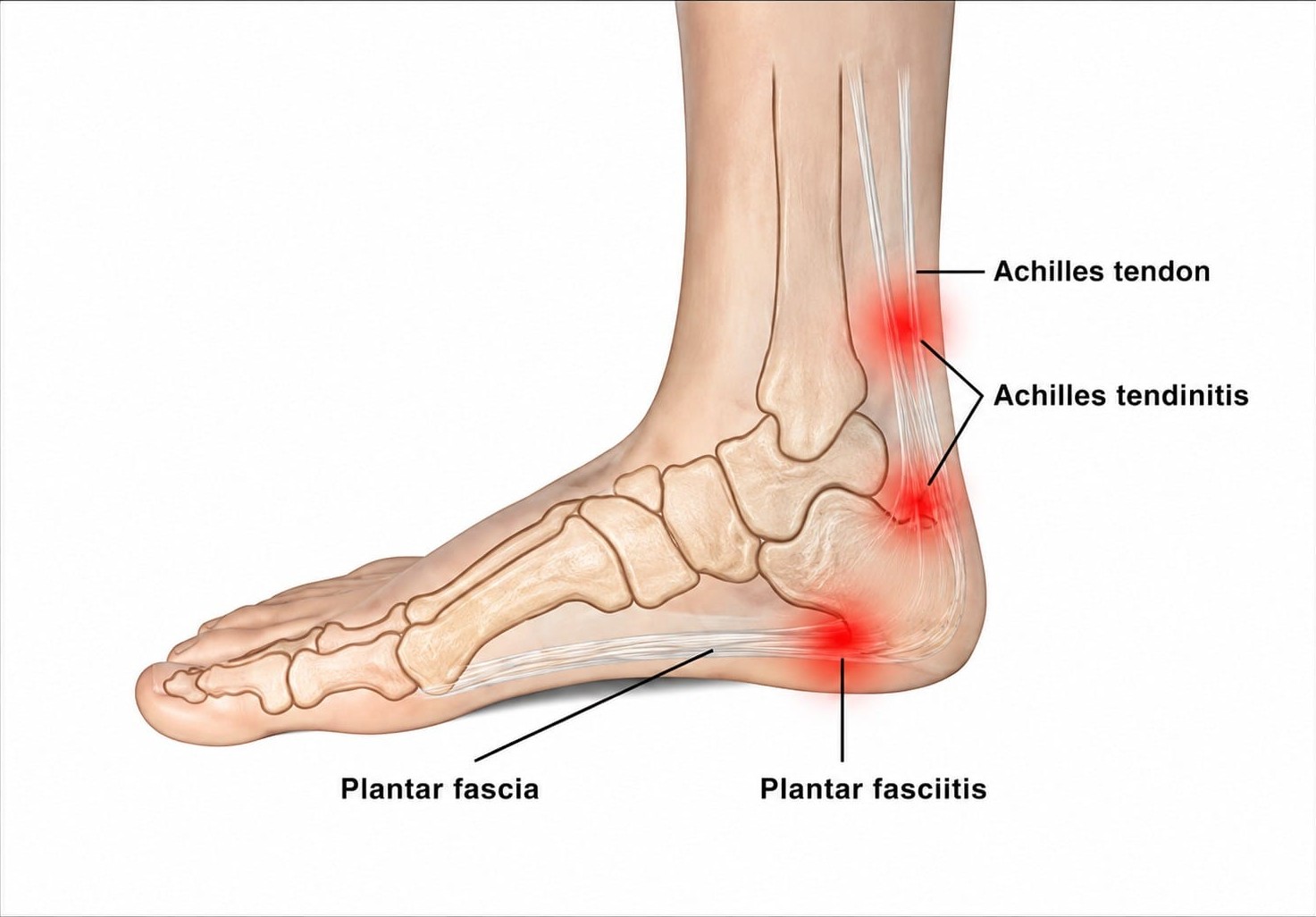
It is one of the most frequent causes of foot discomfort in adults and is often associated with conditions such as plantarfascitis, heel pad syndrome, or Achilles tendon irritation.
Heel pain generally develops when repetitive stress or excessive load is placed on the structures that support the heel, particularly the plantar fascia—a thick band of connective tissue that runs along the bottom of the foot and supports the arch. Poor foot mechanics, prolonged standing, unsuitable footwear, or sudden increases in activity can strain this tissue and lead to inflammation and pain.
Early assessment and appropriate treatment can help relieve symptoms and prevent long-term foot problems such as development of spur.
Symptoms
Biomechanical factors
Activity-related factors
Heel pain is a common foot condition that typically affects below or back of the heel.
It is one of the most frequent causes of foot discomfort in adults and is often associated with conditions such as plantarfascitis, heel pad syndrome, or Achilles tendon irritation.
Heel pain generally develops when repetitive stress or excessive load is placed on the structures that support the heel, particularly the plantar fascia—a thick band of connective tissue that runs along the bottom of the foot and supports the arch. Poor foot mechanics, prolonged standing, unsuitable footwear, or sudden increases in activity can strain this tissue and lead to inflammation and pain.
Early assessment and appropriate treatment can help relieve symptoms and prevent long-term foot problems such as development of spur.
Symptoms
- Pain on the bottom or underside of the heel
- Painful foot arch
- Swelling or tenderness around the heel
- Sharp pain when taking the first steps in the morning
- Pain after sitting or resting for long periods
- Pain that decreases slightly after a few minutes of walking as the plantar fascia stretches
- Pain returning after prolonged standing, walking, or physical activity
Biomechanical factors
- Over-pronation or flat feet, reduced arches causing excessive strain on the plantar fascia.
- High arches leading to poor shock absorption.
- Tight calf muscles or Achilles tendon.
Activity-related factors
- Sudden increase in physical activity or exercise intensity
- Repetitive impact activities such as running or jumping
- Long periods of standing or walking on hard surfaces
- Excess body weight increasing pressure on the heel.
- Pregnancy due to increased body weight and ligament changes.
- Poorly fitting or unsupportive footwear.
- Age-related loss of cushioning in the heel fat pad
- Cool Therapy: Applying a cool gel pack hugging the heel for about 10 minutes several times a day can help reduce pain and inflammation.
- Avoid Going Barefoot: Walking barefoot increases strain on the plantar fascia and heel.
- Orthotic Insoles/footwear: Corrective insoles with arch support help distribute pressure more evenly across the foot and reduce stress on the plantar fascia.
- Activity Modification: Reducing high-impact activities can help prevent further irritation while the tissue heals.
- Achilles Tendon Brace: To offload the excessive pull on the Achilles tendon in Achilles tendinopathy.
- Cool gel pack.
- Dr Edge customised orthotic footwear. for Men and Women
- Dr Edge customised orthotic insoles
- Achilles Tendon Brace.
- Heel raise to reduce strain on the Achilles tendon in case of Achilles tendinopathy.